
Why accident history matters when buying a used car
Checking accident history by VIN is one of the most important steps before buying a used car.
Checking accident history by VIN is one of the most important steps before buying a used car.
By using the VIN number, buyers can discover previous collisions, damage records and hidden vehicle problems
that may not be visible during a normal inspection.
A vehicle that has been involved in an accident may have hidden structural damage, compromised safety systems,
or long-term mechanical issues. Even if the vehicle looks good on the outside, problems can remain under the surface.
This is why experienced buyers always verify the accident history using the
vehicle identification number, commonly known as the VIN.
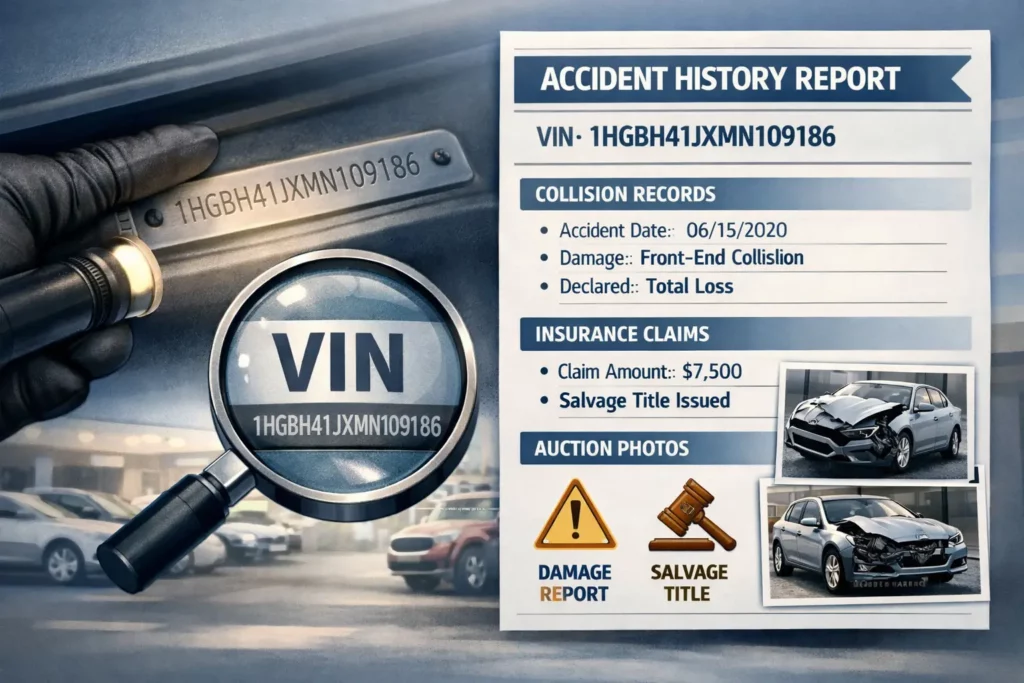
Vehicle accident history showing collision and damage records
How to check accident history by VIN?
What a VIN number is?
The VIN number is a unique 17-character code assigned to every vehicle.
It acts as the vehicle’s fingerprint and allows access to information
about the car’s production details, specifications, and historical records.
The VIN number can reveal:
-
manufacturer information
-
production year and location
-
engine and model details
-
vehicle specifications
More importantly, the VIN number connects the car to historical records stored in different databases around the world.
Vehicle accident history check using VIN
What accident records can reveal
When accident information is recorded in a vehicle history database,
it may include several types of data.
How to check accident history by VIN
Collision reports
Insurance companies often record collisions that involve claims or repairs.
These reports may show the date of the accident and the severity of the damage.
Repair records
In some cases repair shops or insurance companies document structural repairs, body panel replacement, or frame corrections.
Insurance claims
Insurance claim records can sometimes show the estimated cost of damage and whether the vehicle was declared a total loss.
Auction history
Cars that were damaged in accidents are sometimes sold through auctions. Historical auction
listings may include photographs of the vehicle after the incident.
How to check accident history by VIN number
Checking accident history is usually a simple process that takes only a few minutes.
Step 1 – Locate the VIN number
The VIN number can typically be found in several places on the vehicle:
-
at the base of the windshield on the dashboard
-
inside the driver’s side door frame
-
in the vehicle registration documents
-
in the service book
Make sure the VIN number matches in all places.
Step 2 – Enter the VIN into a vehicle history service
After obtaining the VIN number, it can be entered into a vehicle history
database that compiles records from various sources.
Step 3 – Review the accident history report
A complete vehicle report may contain accident records, damage history,
and other important information about the vehicle’s past.
Signs that a car may have been involved in an accident
Even without a history report, there are physical signs that may indicate previous damage.
Uneven paint
If different body panels have slightly different paint shades, it may suggest repainting after an accident.
Misaligned panels
Uneven spacing between doors, hood, or trunk panels may indicate structural repair work.
Welding marks
Visible welding marks on the chassis or body frame can signal serious accident repairs.
A vehicle accident history check by VIN helps buyers identify hidden collision records
and damage reports before purchasing a used car.
New components on an older vehicle
If certain parts of the car appear significantly newer than others,
they may have been replaced following damage.
A detailed accident history by VIN report can reveal collision records,
insurance claims and repair history from multiple vehicle databases.
A detailed accident history by VIN report helps buyers understand if
a vehicle has been involved in previous collisions or serious damage.
A complete accident history by VIN report can reveal previous collisions,
damage records and insurance claims connected to a vehicle.
Why accident history checks protect buyers
Checking accident history helps buyers avoid vehicles that may be unsafe or overpriced.
Cars with major accident history can lose a large portion of their value and may develop long-term mechanical issues.
Understanding a vehicle’s past allows buyers to negotiate better prices or avoid risky purchases entirely.
Combining a VIN check with a professional inspection
While accident history reports are extremely useful, they should ideally
be combined with a professional mechanical inspection.
A qualified mechanic can examine:
-
frame alignment
-
suspension components
-
engine condition
-
hidden structural damage
Combining these two steps provides the most reliable evaluation of a used vehicle.
When to walk away from a car
Sometimes the safest decision is simply not to buy the vehicle. If the accident history shows
severe structural damage, multiple serious collisions, or salvage status, the car may not be worth the risk.
In those cases, it is better to continue searching for another vehicle with a cleaner history.
Checking accident history by VIN allows buyers to verify if a vehicle has been involved in previous accidents or major repairs.
Final advice for used car buyers
Before buying any used vehicle, always verify its background. Checking accident history using the
VIN number can reveal important information that may not be visible during a normal inspection.
Spending a few minutes reviewing a vehicle’s history can save thousands of dollars and prevent serious safety problems.
Reviewing accident history by VIN helps buyers avoid vehicles with hidden damage or serious accident records.
A detailed accident history by VIN report helps buyers understand if a vehicle has been involved in previous collisions or serious damage.
If the vehicle you are checking is a Toyota, it’s important to use a specialized tool for more accurate results.
For a detailed and reliable Toyota check, follow the link below.  follow this link to check a Toyota VIN
Want to explore all available tools and make the best decision before buying a car?
For full access to all checks and services, follow the link below. follow this link to our homepage.