
Detect Hidden Water Damage Before Buying
A flood damaged car check is an important step when researching a used vehicle. Vehicles that have been exposed to flood water can develop serious mechanical and electrical problems that may not be visible during a normal inspection.
Flood damage can affect multiple components of a car including the engine, electronics and interior materials. Because water can reach sensitive systems inside the vehicle, long-term problems may appear even months after the car is purchased.
Performing a flood damaged car check helps buyers identify vehicles that may have been exposed to water damage and prevents costly repairs after the purchase.
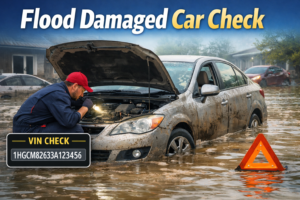
Check for hidden water damage before buying a used car
What Is Flood Damage in Vehicles
Flood damage occurs when a vehicle has been partially or completely submerged in water. This can happen during heavy storms, hurricanes or flooding events.
Water can enter the engine compartment, electrical systems and interior of the vehicle. Even if the car appears clean after drying, moisture may remain hidden inside components.
A proper flood damaged car check helps verify whether a vehicle may have been exposed to flood conditions in the past.
Why flood damaged car check is essential
Flood damaged vehicles often develop problems that are difficult to detect during a quick inspection.
Water exposure can cause corrosion inside electrical systems, sensors and wiring. Over time this corrosion may lead to unexpected failures.
Many flood damaged cars also experience issues with airbag systems, engine electronics and safety sensors.
Performing a flood damage vehicle inspection helps buyers detect these risks before purchasing the car.
Warning Signs of Flood Damage
Although some flood damaged vehicles are carefully cleaned before being sold, certain signs may still indicate water exposure.
Common warning signs include:
• musty or mold smell inside the vehicle
• water stains on carpets or upholstery
• rust under seats or inside door panels
• moisture inside headlights or taillights
• electrical problems or warning lights
These signs may suggest that a deeper water damaged car check should be performed.
How to Perform a Flood Damaged Car Check
Performing a flood damaged car check usually begins with verifying the vehicle identification number (VIN). The VIN allows buyers to search vehicle databases for records related to accidents, damage and insurance claims.
When the VIN is analyzed, vehicle databases may reveal whether the car has been reported as flood damaged or declared a total loss due to water exposure.
This information helps buyers confirm whether the vehicle has a history of flood damage.
For additional verification, buyers often review a complete vehicle history report.
You can verify flood damage records and review vehicle history directly on
https://securevin.eu
How Vehicle History Reports Reveal Flood Damage
A vehicle history report collects information from multiple sources including insurance companies, inspection stations and vehicle registration authorities.
These records may reveal whether a vehicle has been involved in flooding events or declared damaged due to water exposure.
A detailed car history report provides valuable insight into the vehicle’s past and helps buyers detect hidden flood damage.
Reviewing these records before purchasing a vehicle significantly reduces the risk of buying a flood damaged car.
Final Advice for Used Car Buyers
Buying a used vehicle requires careful verification of the vehicle’s condition and history.
A flood damaged car check helps buyers identify vehicles that may have been exposed to water damage and ensures that the car is safe to purchase.
Combining a flood damage inspection with a detailed vehicle history report provides the best protection when buying a used vehicle.
Before completing any purchase, always verify the vehicle’s records and confirm that the car has not been affected by flooding.
A car that has been in a flood can look perfect—but hide major damage underneath.
Don’t take the risk—verify the vehicle information now.  run a quick VIN check